Day trip from Mysore to Shravanabelagoda and Melukote
March 2019
A Day Trip from Mysore
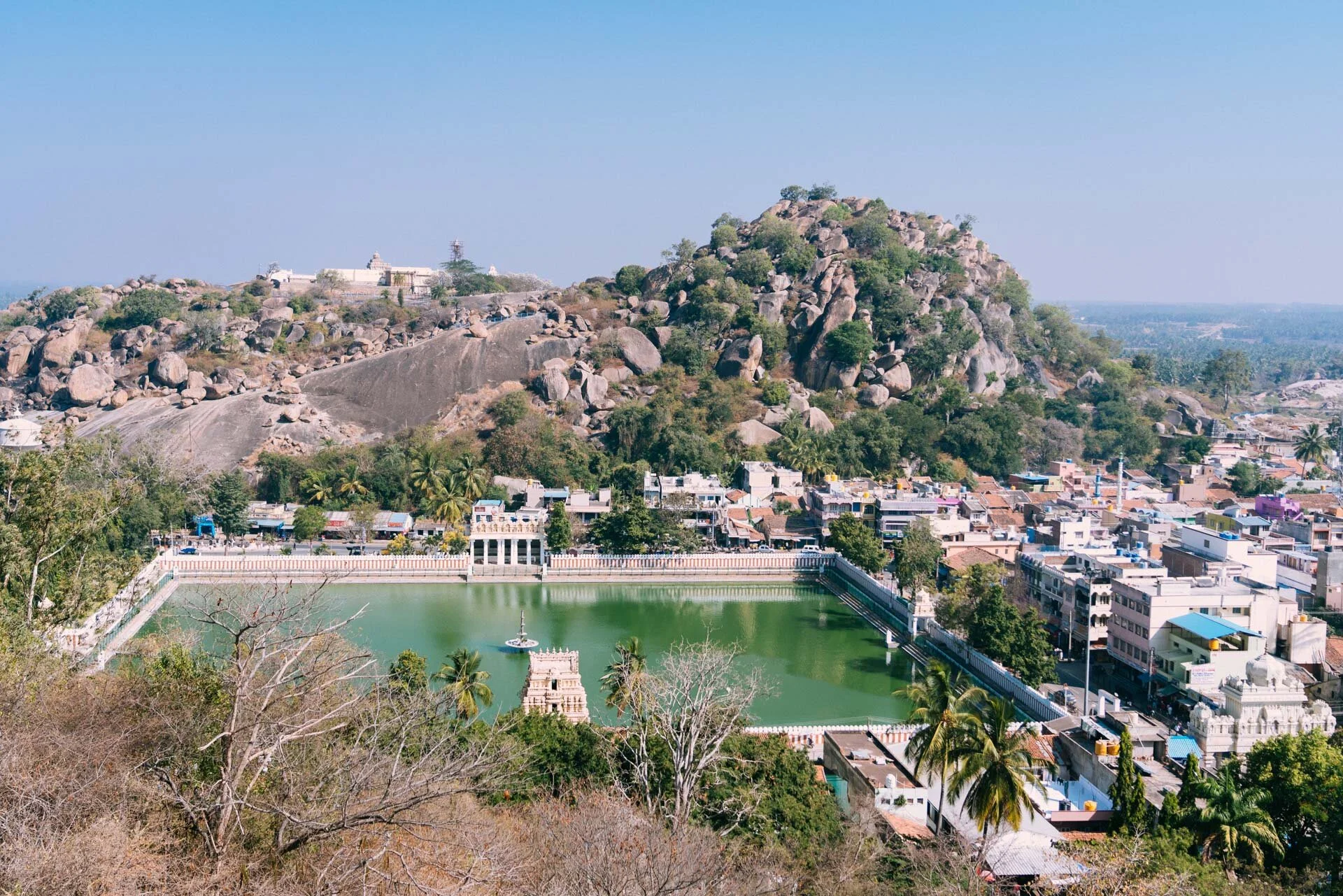
Although this was our fifth visit to Mysore, there was still so much more to explore. We took a gorgeous day trip to the Shravanabelagoda and Melukote, both a couple of hours from Mysore.
As is always the case when we stay with our good friends Stephen and Manjula at Mysore Bed and Breakfast, we made some lovely new friends, Dave and Ann from Cleethorpes in the UK, and the four of us decided to take a day trip that would include Shravanabelagoda, home to a famous Jain temple and a giant statue of the revered figure Gomateshwara, and the temple town of Melukote.
It was too far to go by rickshaw, so we traveled luxuriously by car, driven by the ever-enthusiastic, fluorescent-orange-bearded Anjam. The journey was gorgeous: rice fields, coconut and mango trees, and an array of animals kept us entertained for a couple of hours.
Breakfast at Shravanabelagoda
When we arrived in Shravanabelagoda, we splashed out a quid each on a delicious Indian breakfast, enough fuel to get us to the top of the roughly 700 stairs we needed to climb to reach the top of Vindhyagari Hill, home to the temple and statue we had come all this way to marvel at.
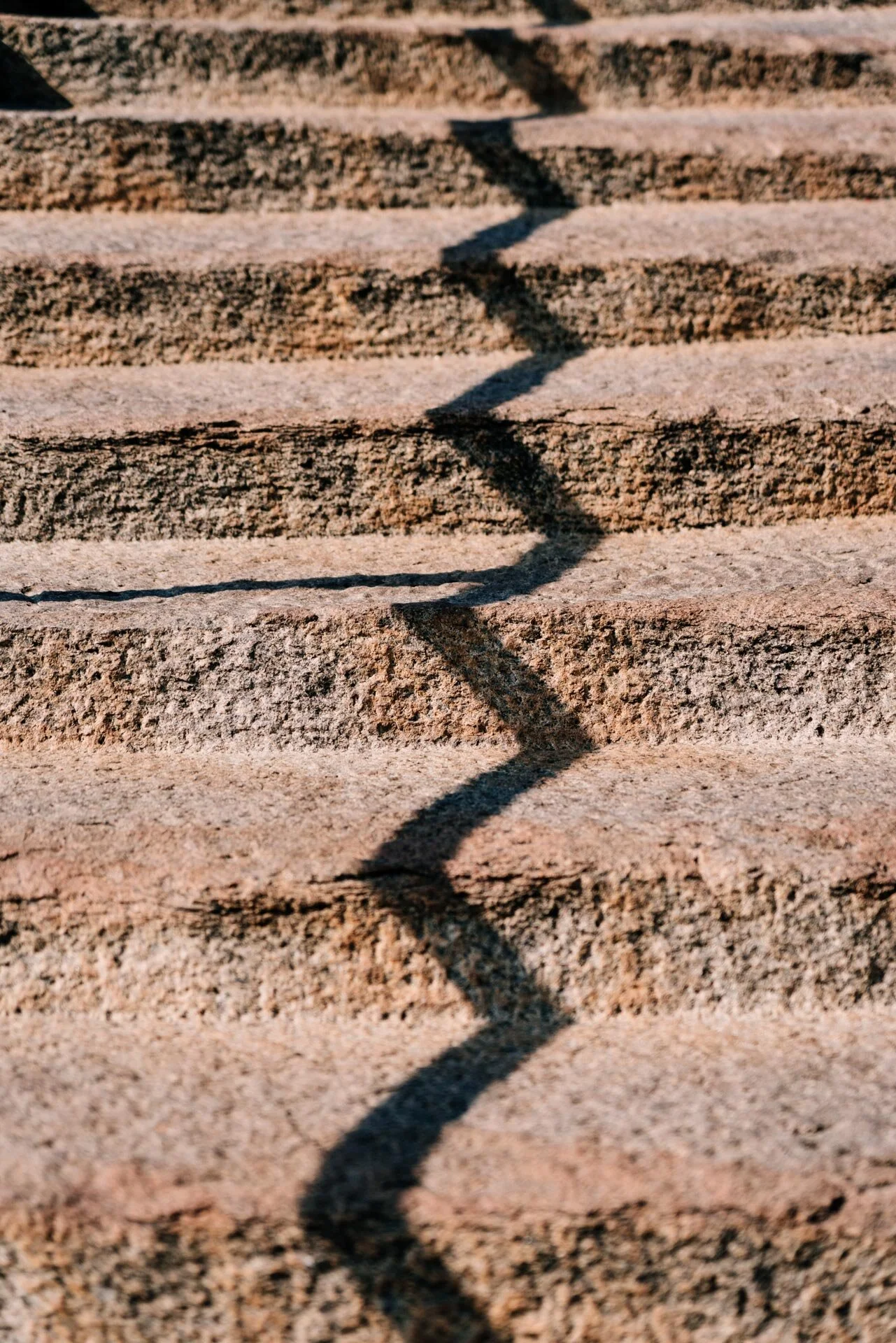
I had envisaged huge, steep, uneven steps, so I was pleased to find a really well-built staircase that I’d say would be manageable for anyone of average fitness. We had to stop and catch our breath every now and then, but it got the blood pumping and wasn’t particularly gruelling. The views, even from halfway up the stairs, were breathtaking, let alone from the very top.
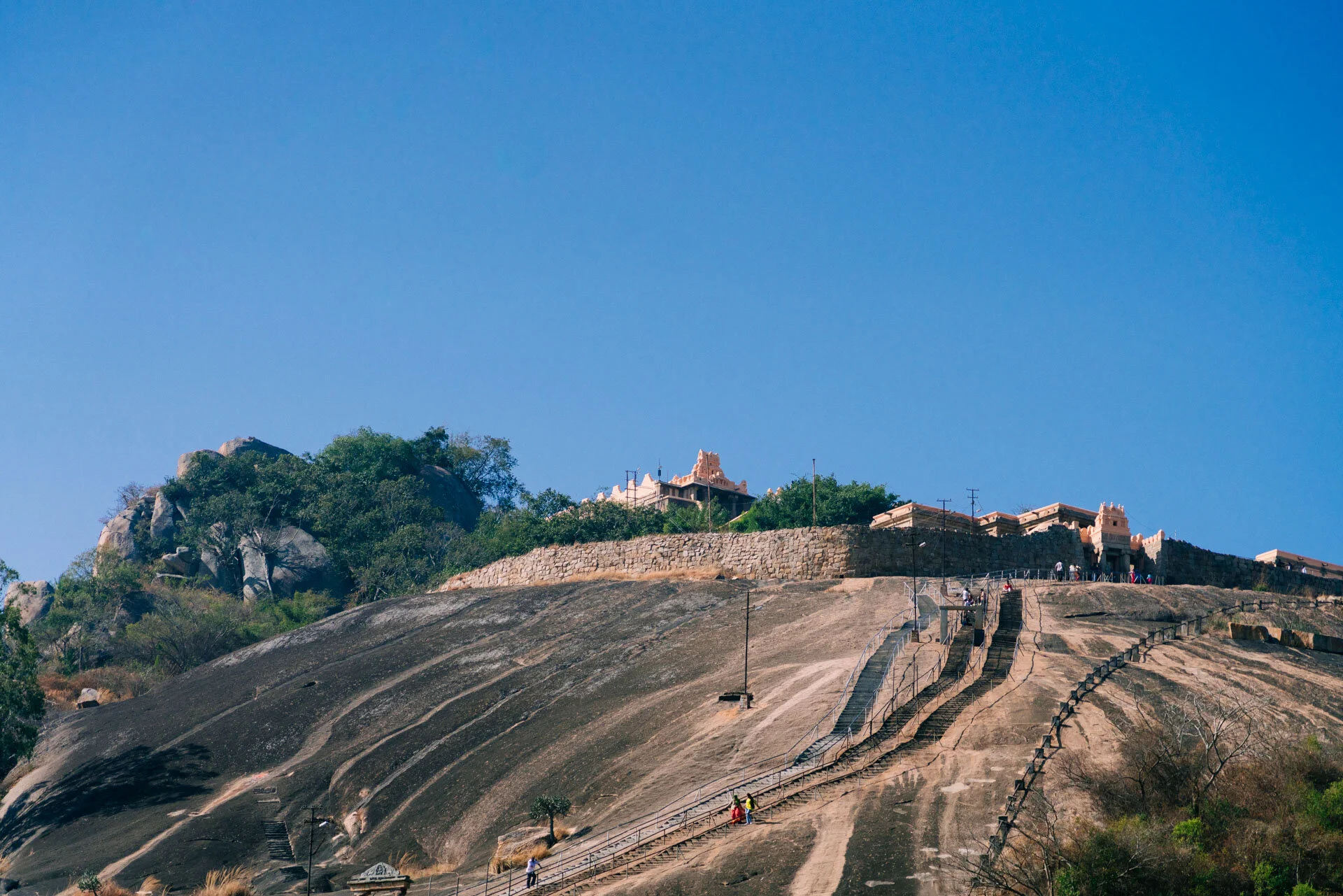
Kammateswara and the Gomateshwara Statue
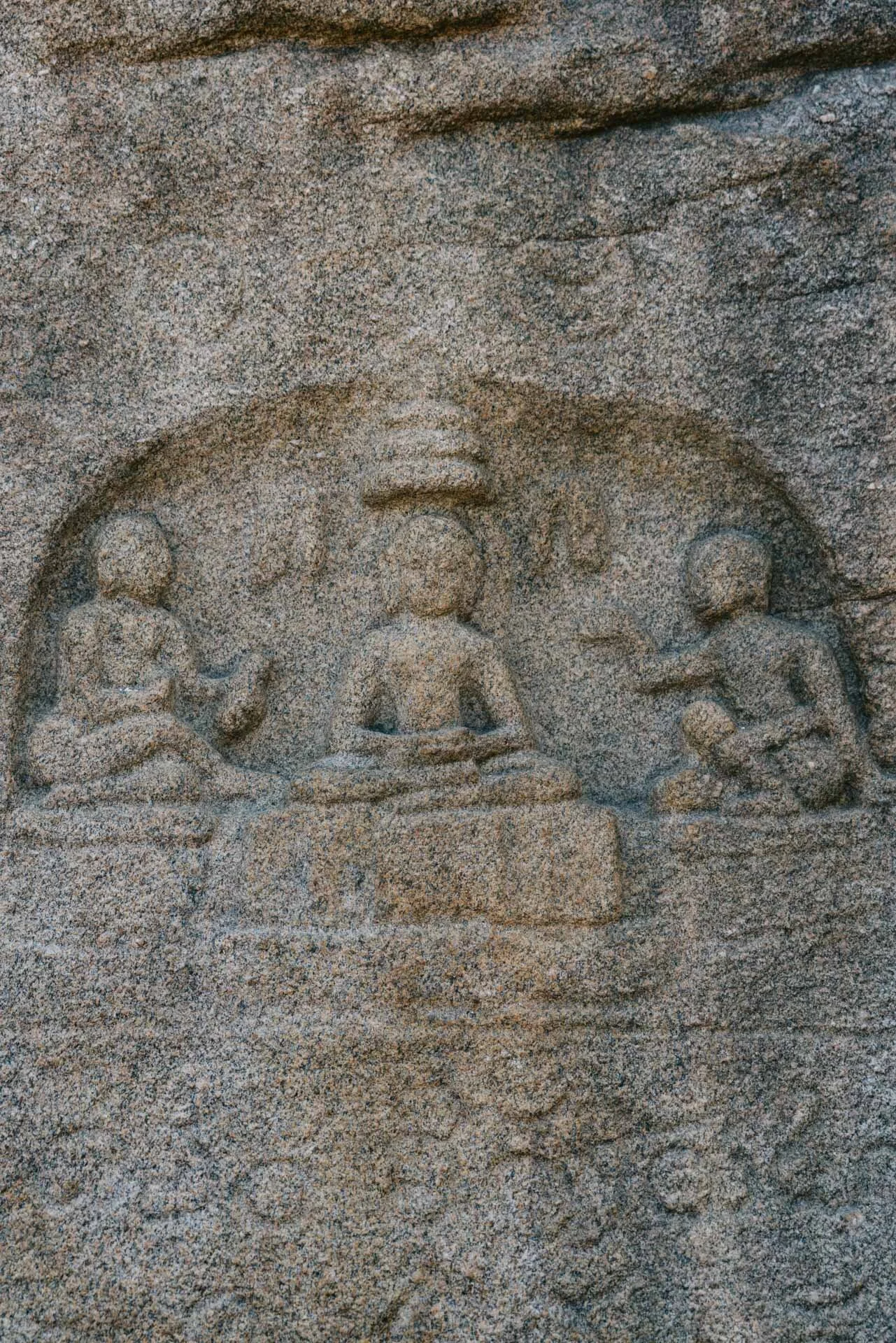
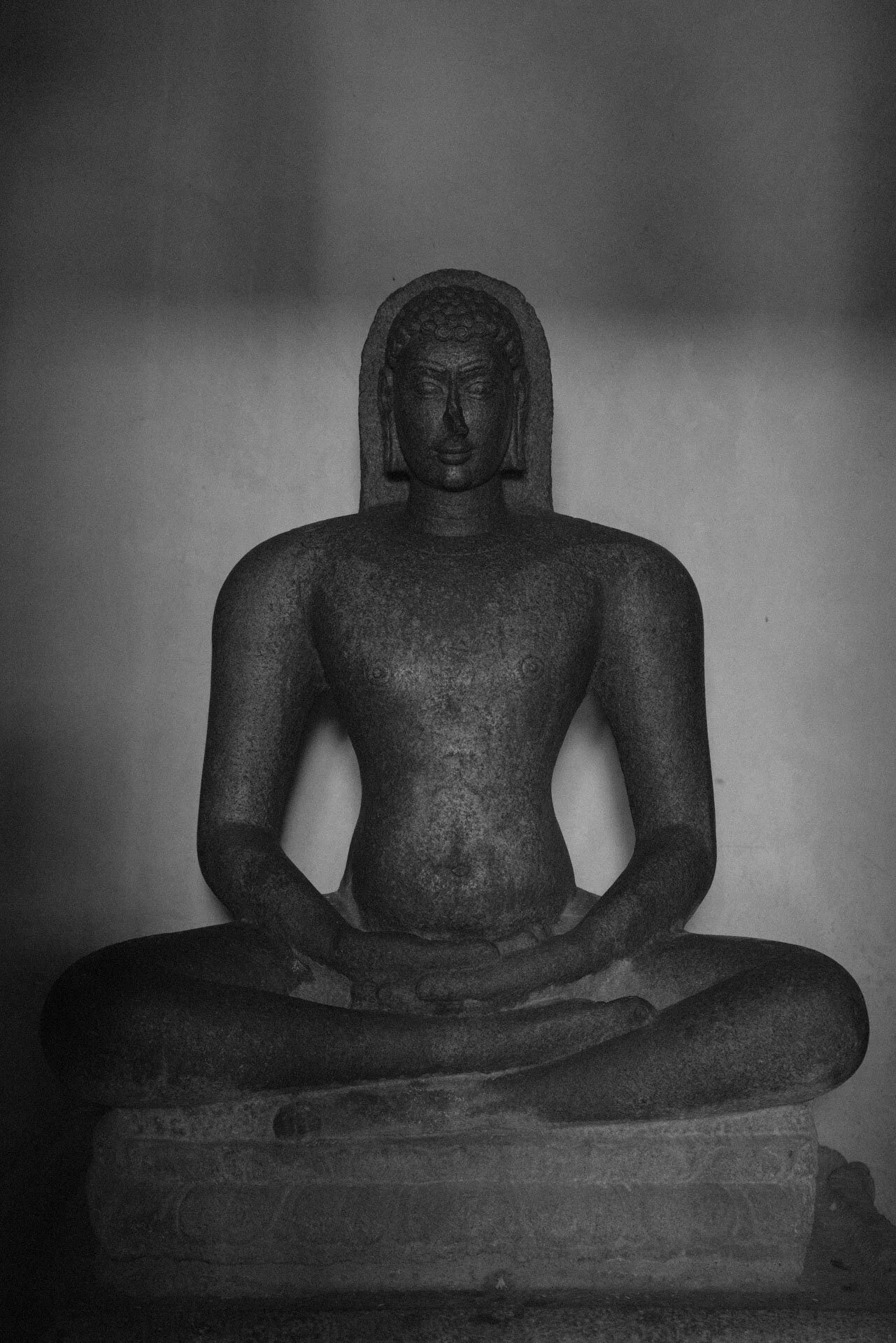
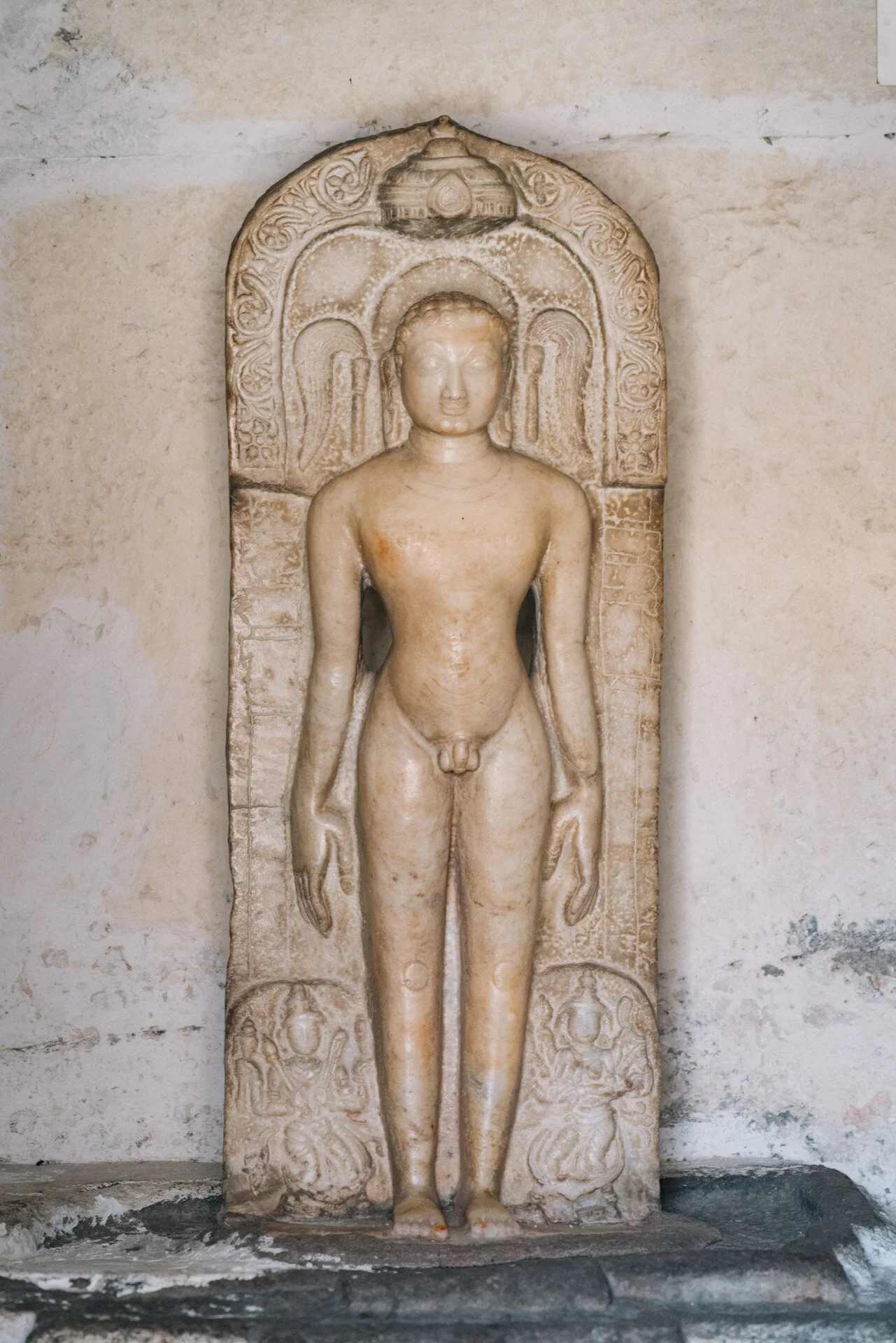
Gomateshwara, or Bahubali, was the son of Rishabhanatha, one of the very first leaders and teachers of Jainism, who is believed to have lived millions of years ago. It is said that Bahubali gained omniscience after spending one year meditating in a standing posture. During this time, plants grew up his legs and body. For this reason, he’s often depicted standing up, with vines wrapped around his limbs. I just find this imagery so beautiful.
The 57-foot Gomateshwara statue in Shravanabelagoda is believed to have been carved from a single piece of rock a staggering 1,038 years ago. It’s impossible to imagine how it was transported to the top of the hill, let alone the level of skill needed to create such a magnificent monolith. Although it was encased in bamboo scaffolding when we visited, it was hard to comprehend that something so old could look so pristine.
I have a bit of a thing about giant statues. I find them incredibly humbling and peaceful. The amount of devotion that goes into creating these immense tributes to revered Gods is something I find extremely beautiful. Seeing these deities come to life in such an exaggerated way feels magical. Usually, they reside at the top of hills or mountains, with the ever-changing backdrop of the sky as they sit or stand in complete stillness. The fact that these may not be my gods is totally irrelevant. There always seems to be some connection.
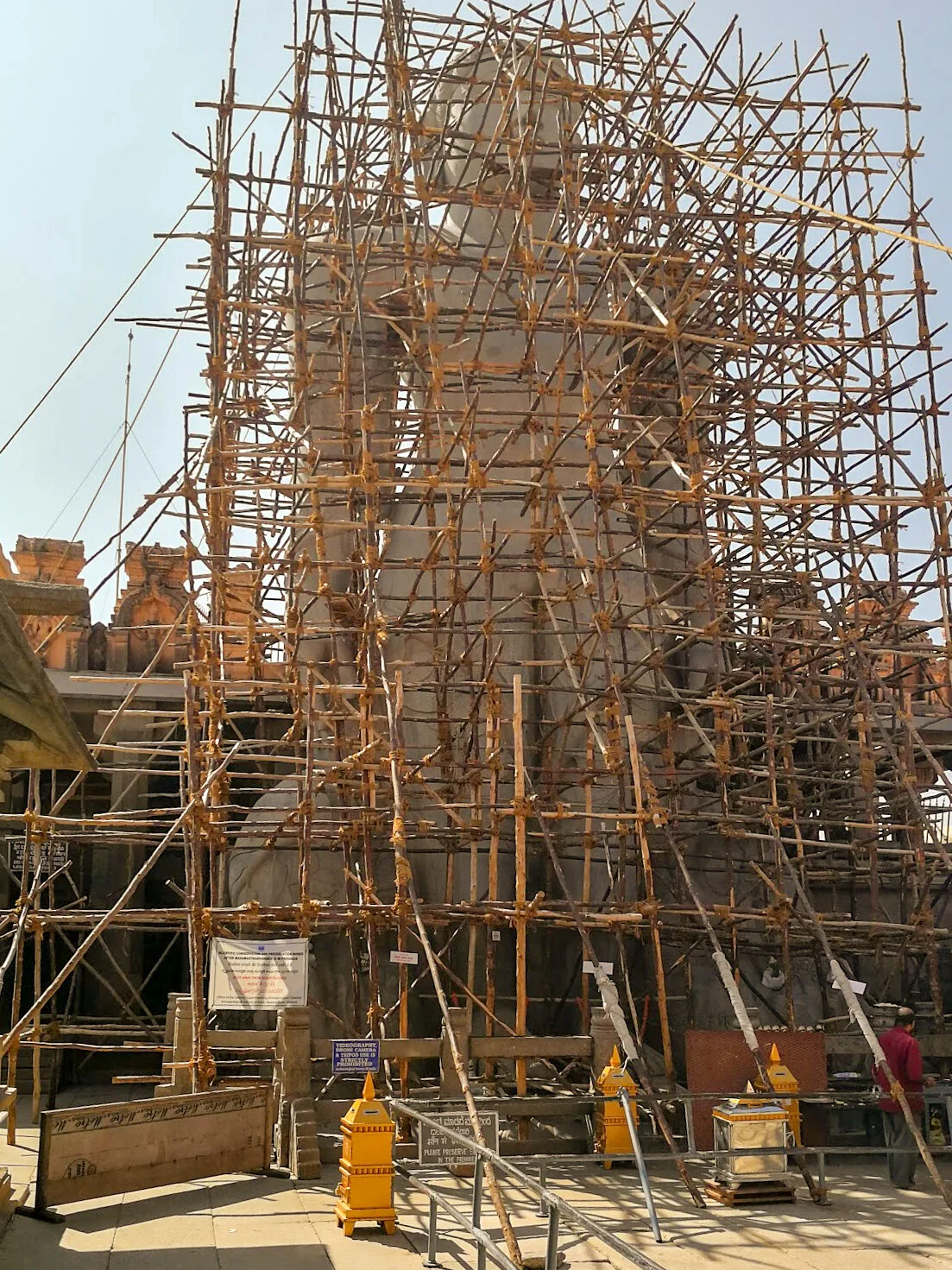
57-foot Gomateshwara statue in Shravanabelagoda
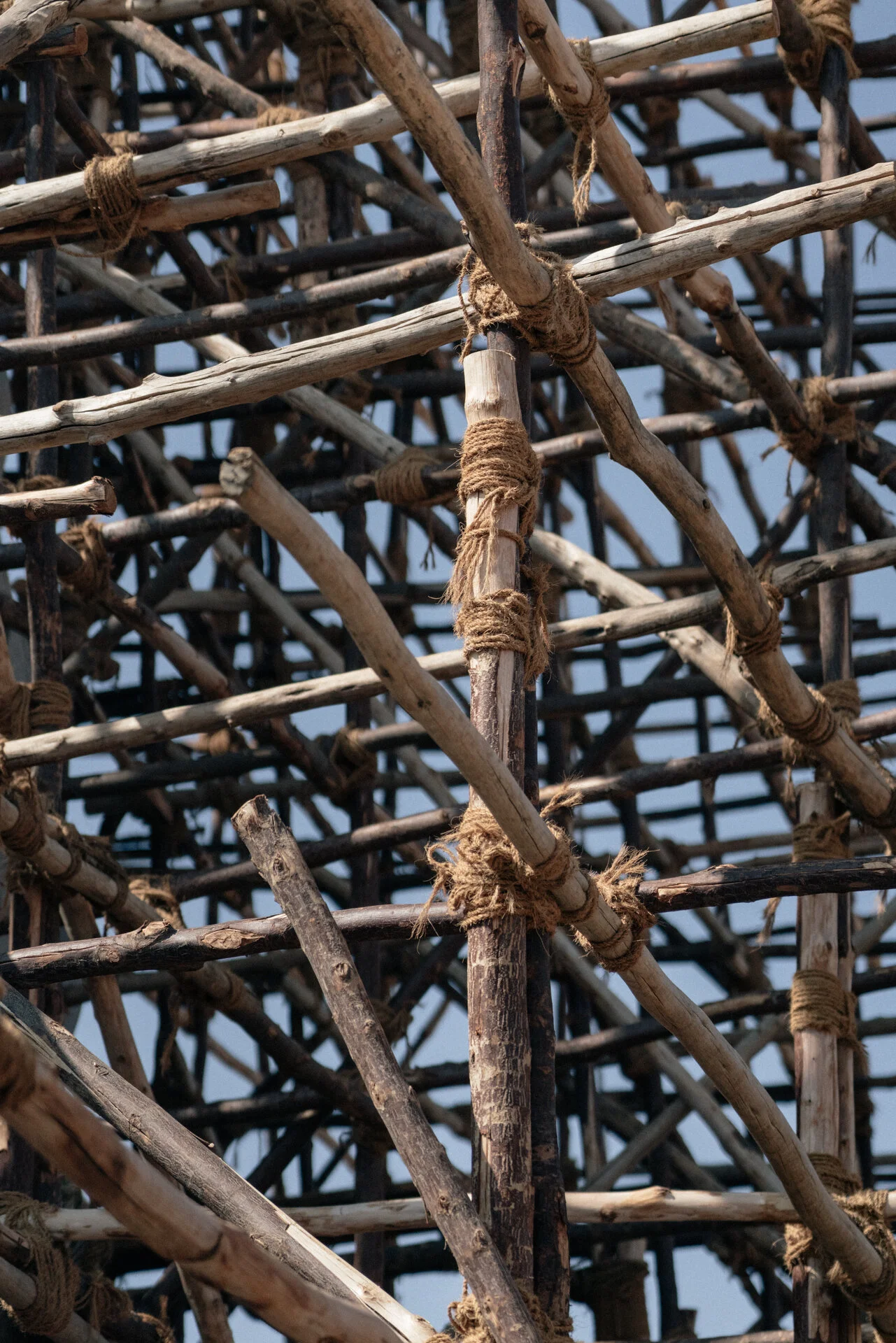
Off to Melukote
Once we had soaked up all that we could from Shravanabelagoda, we made our way back down the stairs. Cue wobbly legs.
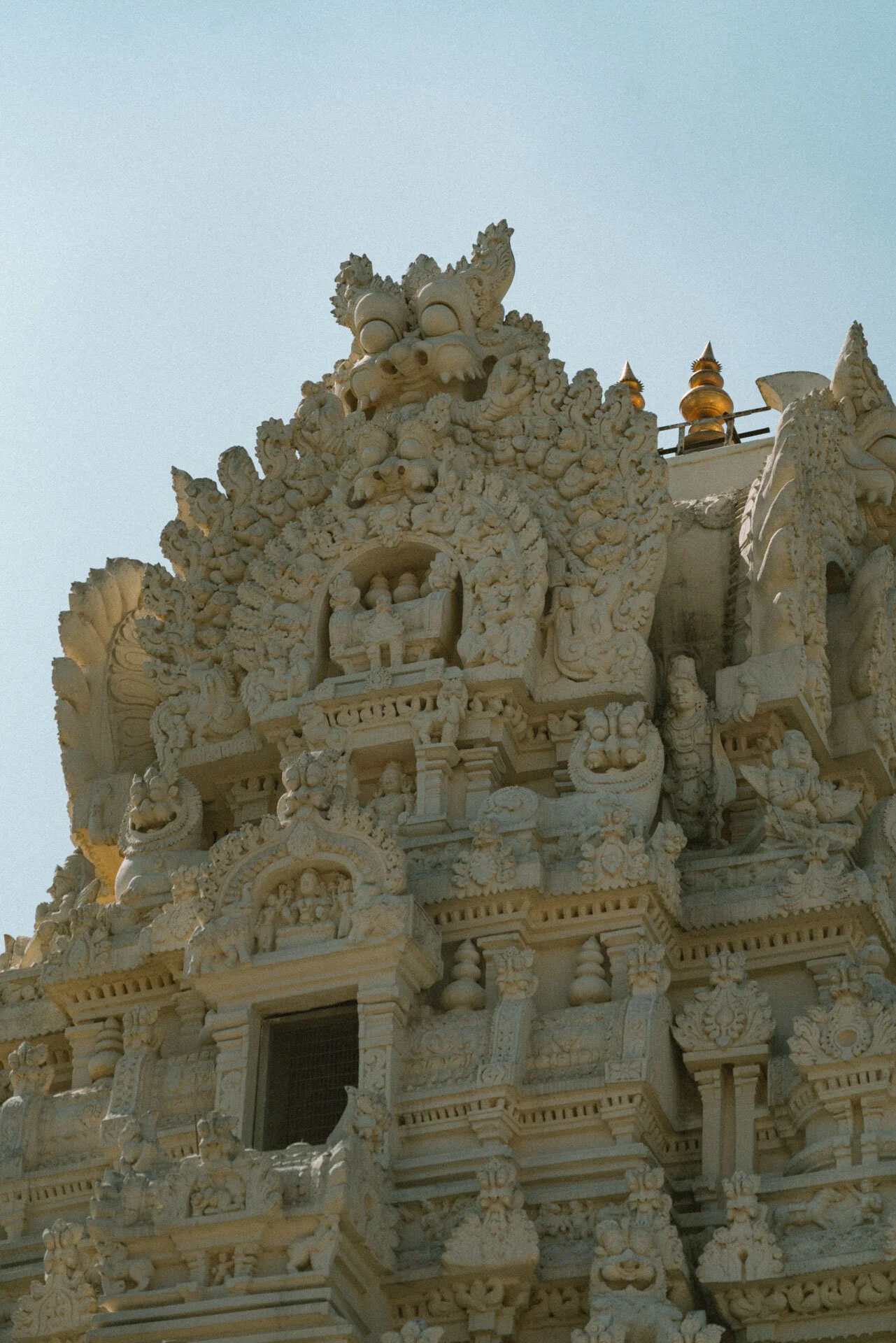
Anjam was waiting for us at the bottom, ready to take us to Melukote, also known as Thirunarayanapuram, which took just under an hour. As we approached the town, he pointed to a temple at the top of a big hill. More stairs.
After a quick warning about “many, many monkeys,” we were pointed toward the bottom of the hill we needed to climb to reach Yoga Narasimha Temple. As we heaved ourselves up the slightly steeper steps, dodging monkeys at the top, we were blissfully unaware that the temple was closed between 1–4 p.m., and made our ascent around 1 p.m. We managed to get in and see some of the goings-on, but after about ten minutes, we were ushered out and made our way down again. The views at the top were incredible, and what we did see was beautiful, so it was definitely worth the climb.
A Surprise Festival at Cheluvanarayana Swamy Temple
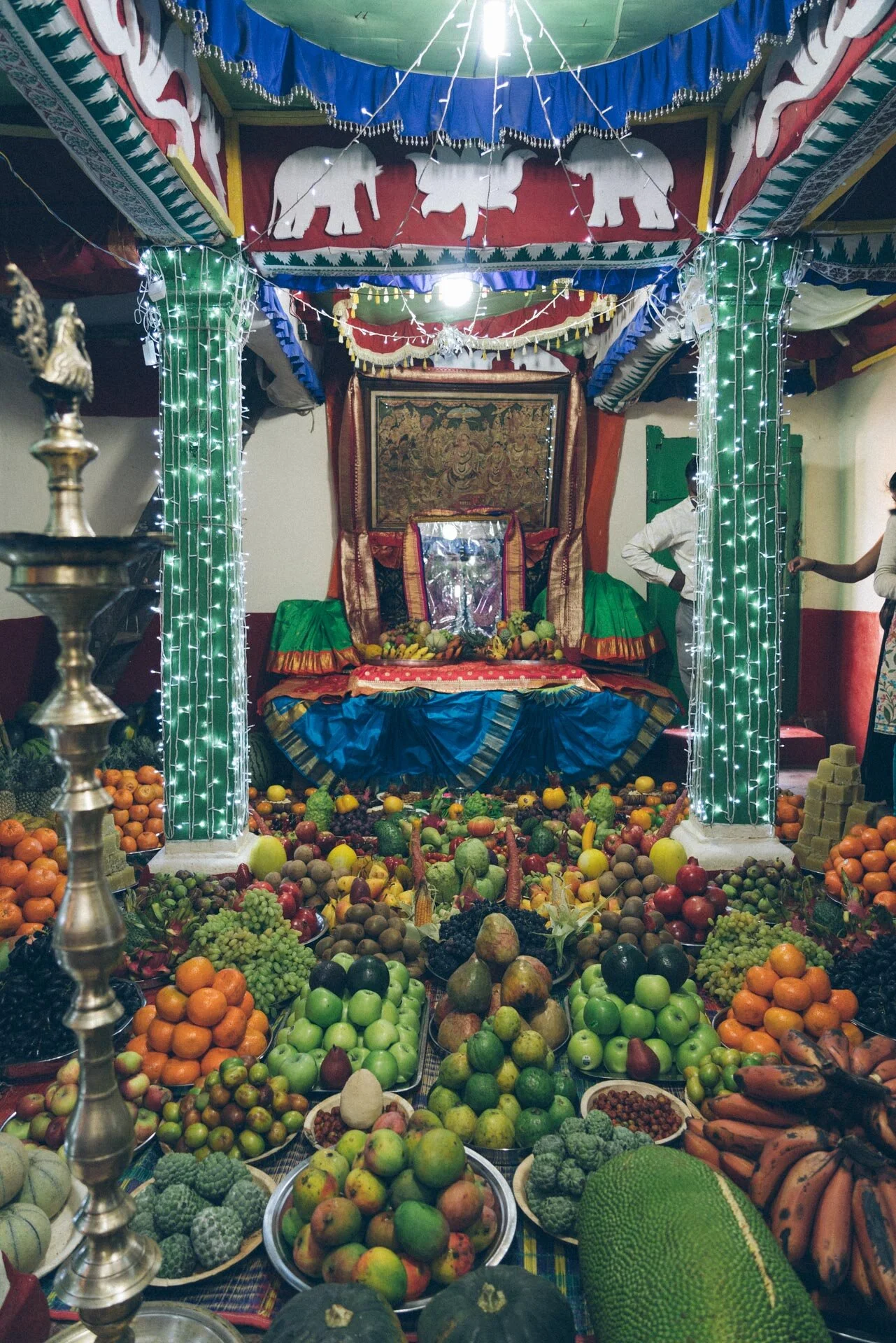
Back down on the ground, we headed round to Cheluvanarayana Swamy Temple, only to find it also closed between 1–4 p.m. However, as is often the case in India, things seemed to fall into place regardless of time constraints. Just as we were about to leave, a friendly local beckoned us over and said, “You can come here and see inside.” He led us to a small temple around the corner, where we were blown away to find thousands upon thousands of pieces of fruit from all over the world.
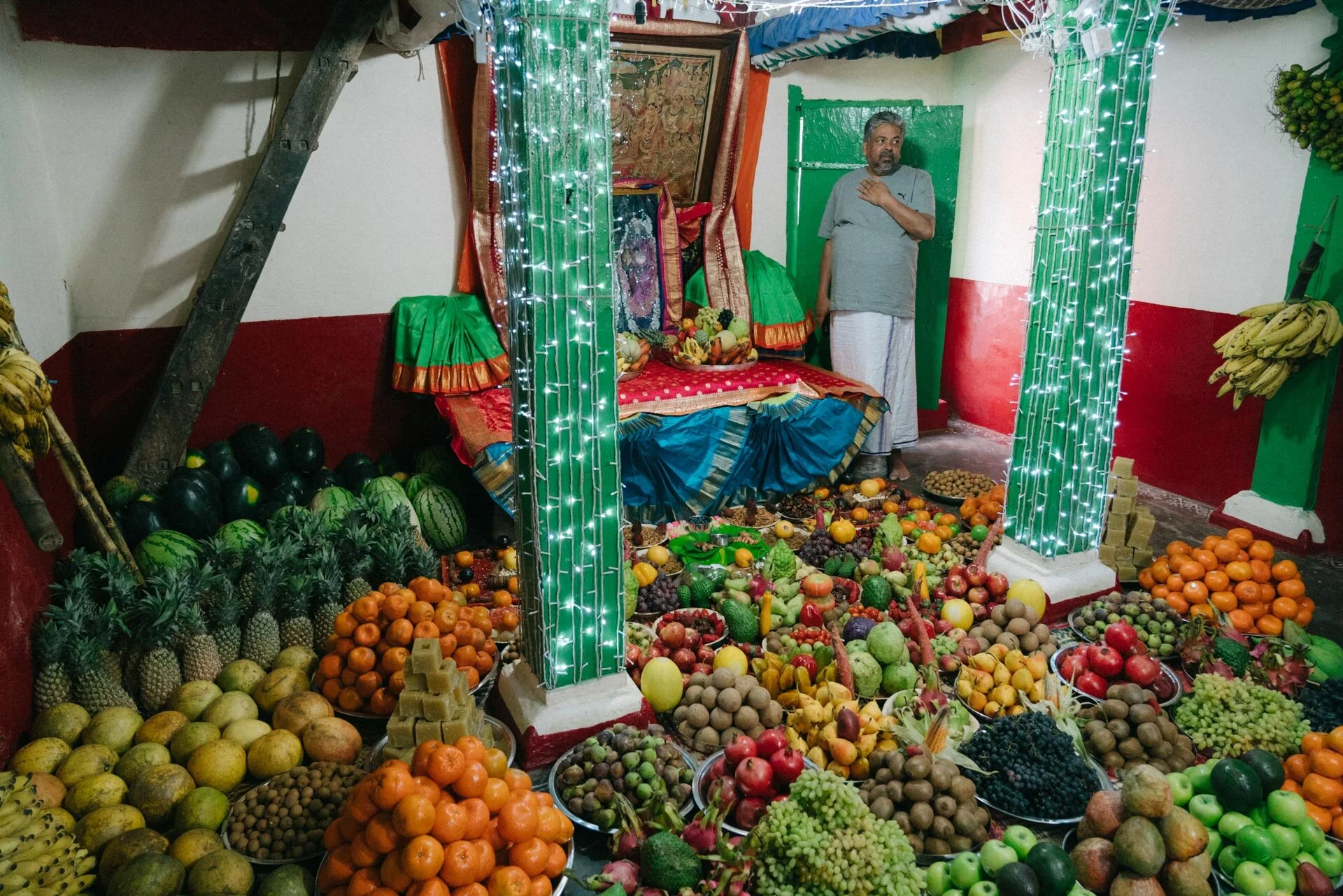
It turned out we had arrived on the day of a yearly festival held in honor of the goddess of the temple. We were shown around and treated with so much kindness, as is pretty much always the case in India. We were told we had actually arrived at just the right time, lunchtime, and were invited to eat with all the devotees who were taking a break from laying out the fruit. It was an offer we couldn’t refuse.
We sat on the floor and were given plates made of leaves stitched together with tiny sticks. A quick splash of water ensured there was no dust, and then gradually people brought out various foods, all of which were delicious. We were reminded, as we so often are in India, that “guest is God” and that it was an honor to have us visit.
Shortly after our fabulous meal, we hurried outside to see the goddess being carried into the temple, where she would stay until the evening’s festivities. She was accompanied by musicians and devotees, some of whom smashed coconuts on the floor to ward off evil spirits.
Although we were kindly invited to stay for the evening’s festivities, we were all absolutely exhausted. We had already seen lots of wonderful things and began our journey home.

Visiting the Khadi Cotton Factory
On the way, we stopped at the Janapada Seva Trust khadi cotton factory. Khadi, or khaddar, is hand-spun, hand-woven cotton cloth, which not only looks and feels beautiful but also has a culturally important history. In the 1920s, Gandhi famously encouraged people to boycott British fabrics, spin their own cotton, and make their own fabrics. This contributed hugely to the freedom movement and allowed people to reclaim pride in their heritage, while also highlighting the exploitative policies of colonial British rule. The All India Spinners movement was established in 1925, and for two decades, the organization worked to improve conditions for India’s impoverished weavers, boosting employment rates in rural parts of the country.
We actually visited the day after a national holiday, so just a few workers were in the factory. Although we didn’t see it in full operation, we got to see various intricate contraptions being used to make beautiful fabrics. No electricity, of course, all man and woman-powered. It was a fascinating process, and I’d definitely recommend a visit.


Tips for Planning Your Own Trip
The best way to pack all of these places into one day would be to set off super early from Mysore so you don’t find yourself at the temples during the hours they shut down. Depending on how leisurely you tend to roam around temples, I’d recommend a 6–7 a.m. start, with breakfast en route or in Shravanabelagoda. That said, two of the places were closed when we arrived, yet we still managed to see the incredible temple full of fruit, a procession, and enjoy a delicious lunch with the devotees. This is India, so make plans, or don’t. Results tend to be the same, or wildly different, depending on how you look at it.